
When Parenting Differences Turn Into Relationship Conflict
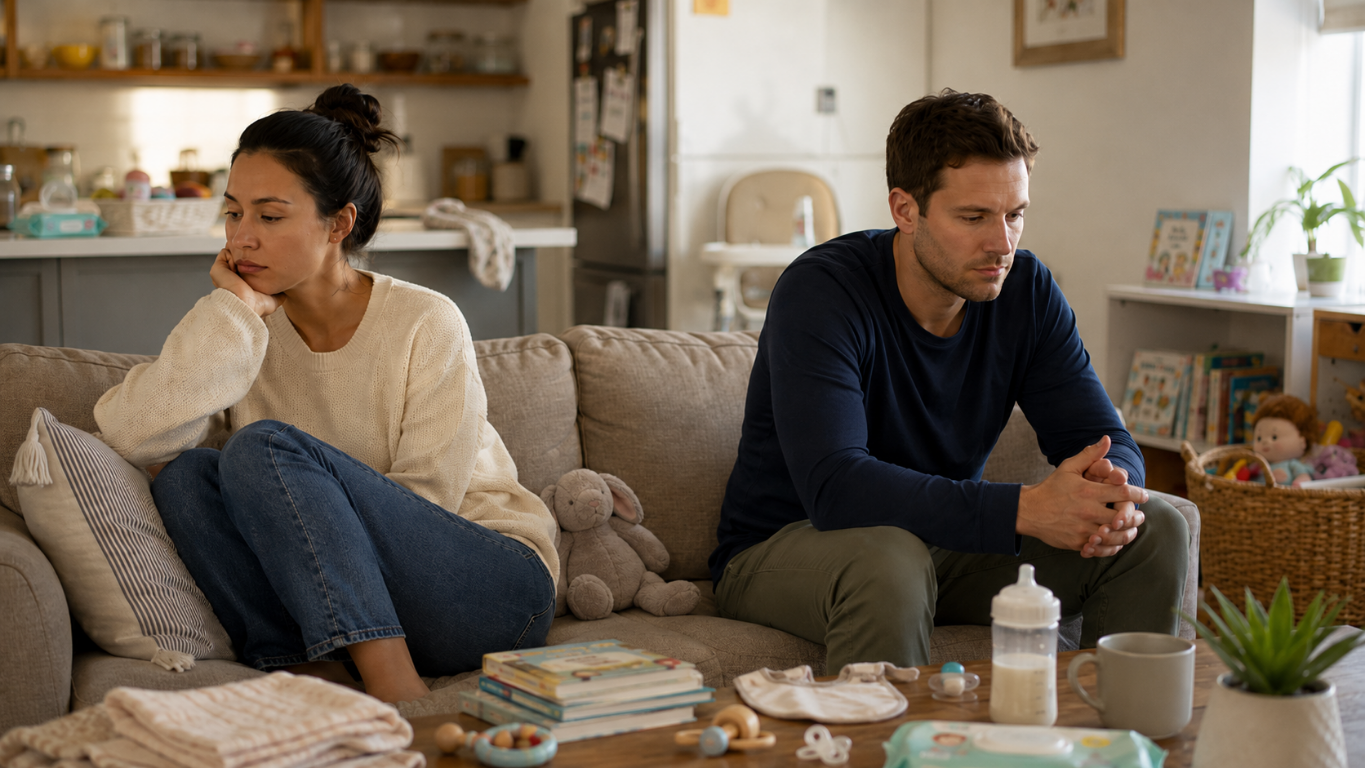
As parents, there are so many decisions to make. Some feel like they "should just be this way” and others, you’re not sure and are genuinely open to talking through.

When you're open to it, the conversation is usually smooth. You're willing to hear a different view, try a different way and you're not stuck proving your way is the only way.

But when something feels like it "should just be this way", that's usually where it gets hard because you've already made the decision, without your partner even knowing or having a say.

Should we let them cry it out, or go in straight away?
Should we sleep train or not?
How much screen time is okay?
Is being firm good discipline or too harsh?
Should we talk through big feelings or help them move on?
How involved should grandparents be?
What's the best way to feed our child?

The list goes on...

Disagreeing about parenting is one of the most common things couples go through and most of the time, the disagreement isn’t about the decision itself.
Parenting styles aren't random
Most people don't consciously choose how they parent. It just comes out of them.

This is because long before you had your child, you formed a sense of what care, comfort, discipline and safety look like based on how you were raised.

You might parent the same way you were parent or actively parent the opposite way if how you were raised hurt you.

If you were left to sort out your own problems as a kid, you might hold back from helping your child too quickly, wanting them to learn the same way.

If your parents fought in front of you and it had an impact on you growing up, you might go out of your way to keep everything calm in front of your kids, even when it means avoiding a conversation you actually need to have.

If you were disciplined strictly, you might find yourself using the same firm tone your parents used, even when you’d rather not.

If you grew up needing more comfort than you got, you might move toward your child the moment they're upset, almost without thinking.

When we step back from our own parenting and childhood experiences, most of us will know and understand that everyone’s childhood is different and even where two people's upbringings look similar, how each of them experienced it can be different too.

But when you’re in the thick of parenting, it’s hard to have this perspective. This often means that when you and your partner are parenting the same child, it’s inevitable that disagreements are going to happen because it's what happens when two different histories meet in the same house.
Why disagreements escalate so quickly
When your approach gets challenged, sometimes it can feel like more than a difference of opinion, especially when you're sleep deprived, feeling distant from your partner, or stressed.

It can feel like you're being told you're wrong or that the way you were raised or the way you instinctively want to protect your child, isn't good enough. That sting is even sharper when you've done the research and your partner still doesn't agree.

"I think we should do this differently" can quickly turn into "you think I'm a bad parent" (even if nobody said that or meant it that way). And once it feels personal, you're no longer arguing about bedtime or screen time. You're defending who you are.

It can also start to feel like your partner doesn’t see how hard you’re trying. You might feel misunderstood, unsupported or as though your judgment as a parent isn’t respected. Even when neither person intends to send that message, it can be what the disagreement begins to mean.

And sometimes there's another layer underneath, too: wanting the final say. Wanting your voice to count and be heard in decisions about your own child is completely reasonable. But sometimes it's less about the decision and more about needing to feel like you've still got this, especially on the days everything else feels out of your hands. When the baby's not sleeping, the house is a mess and you haven't sat down since 6am, having one thing you've got that works can feel like proof you're not failing. So you dig in on the swaddle or the schedule or the screen time rule, not because it's the hill worth dying on, but because giving ground there feels like giving up the one place you still feel capable.

And when both of you are feeling that way at once, the fight stops being about bedtime or screens. It becomes about whether you each still feel like an equal decision-maker in your child's life.
The disagreement underneath the disagreement
Underneath most recurring parenting arguments are questions that don't get asked out loud:

Do you trust how I parent?
Do you think I'm doing this wrong?
Can you see how hard I'm trying?
Do you respect my judgment as a parent?
If I let this go, does that mean I've failed?
Are we actually on the same side?

When those questions are sitting underneath a conversation about nap schedules or consequences, it makes sense that the conversation feels bigger than the actual decision. It was never really just about the rule. It was about whether you feel understood, respected and supported by your partner.
Something to try this week
Next time you and your partner disagree on a parenting decision, pause before defending your position and ask yourself:

Why does this one matter so much to me?

The answer may be tangled up in your own upbringing or a fear about getting this wrong or a need to feel like you've got this. Knowing what it is before you talk usually changes what you say.

Then, when you're ready, ask each other:

What do we both actually want for our child here?
What do we need from each other?

These questions can help change the conversation from both of you being on opposite sides to trying to figure something out together.
Why this is worth getting right
How you and your partner communicate, manage conflict and reconnect afterwards isn't just important for your relationship. It's one of the most important things shaping your child's world.

Kids pick up on how the adults around them argue, repair and stay close even when things are hard. Your relationship shapes their sense of safety and they carry that into every relationship they go on to have.

This is part of why working through parent differences is worth the effort. It was never about tonight's bedtime battle or who's right. It's about the relationship you're building for yourselves and for your child.
How counselling can help
Counselling can help you and your partner understand where your parenting instincts come from and what it is that you need from your partner so that the conversation can shift from arguing about who's right to understanding each other and finding a way forward together.

Counselling isn’t about finding a way for you both to agree on everything, but rather, finding enough understanding between you to be facing the same direction.
Ready to talk?
If you’ve been thinking about couples counselling and wondering whether now is the right time, hopefully this has helped a little.

Better Days Counselling offers couples counselling in Melbourne, with in-person sessions in Mont Albert North and online sessions available. If you're ready to take that first step, you can book an initial session here.

If you're not quite there yet, you're welcome to reach out with a question first or you can start with the In-Between Service, which is four weeks of personalised email support for people who know something needs to change but aren't ready for counselling yet.